












DREO RO Water Filters: The Next Step in Clean Water Technology
With 7-layer RO filtration and SGS tested performance, DREO water filters bring measurable purification and reliable clean water to everyday life.


Clean drinking water has become one of the most discussed topics in modern home technology. As awareness of water quality grows, expectations for filtration systems have changed as well. It is no longer enough for a filter to simply promise cleaner water. What matters now is measurable performance and reliability.
Reverse osmosis technology has become a leading solution for this reason. By pushing water through a specialized membrane and multiple filtration stages, RO systems can remove microscopic contaminants that traditional filters often struggle to capture. But not every RO system performs the same. The effectiveness of purification largely depends on two factors: how advanced the filtration system is and how efficiently purified water can be produced, and DREO's RO water filters are engineered to deliver both.

When Filtration Design Determines Purification Power
In water filtration, architecture matters. The number of filtration stages and how they work together directly determines how thoroughly water can be purified.
Each layer in a filtration system targets a different type of impurity. Sediment filters capture larger particles such as rust and debris. Carbon filtration reduces chlorine and odors that affect taste. The reverse osmosis membrane then handles what conventional filters struggle with: microscopic contaminants and dissolved pollutants.
When these stages are structured correctly, they form a layered purification pathway that gradually removes impurities step by step.
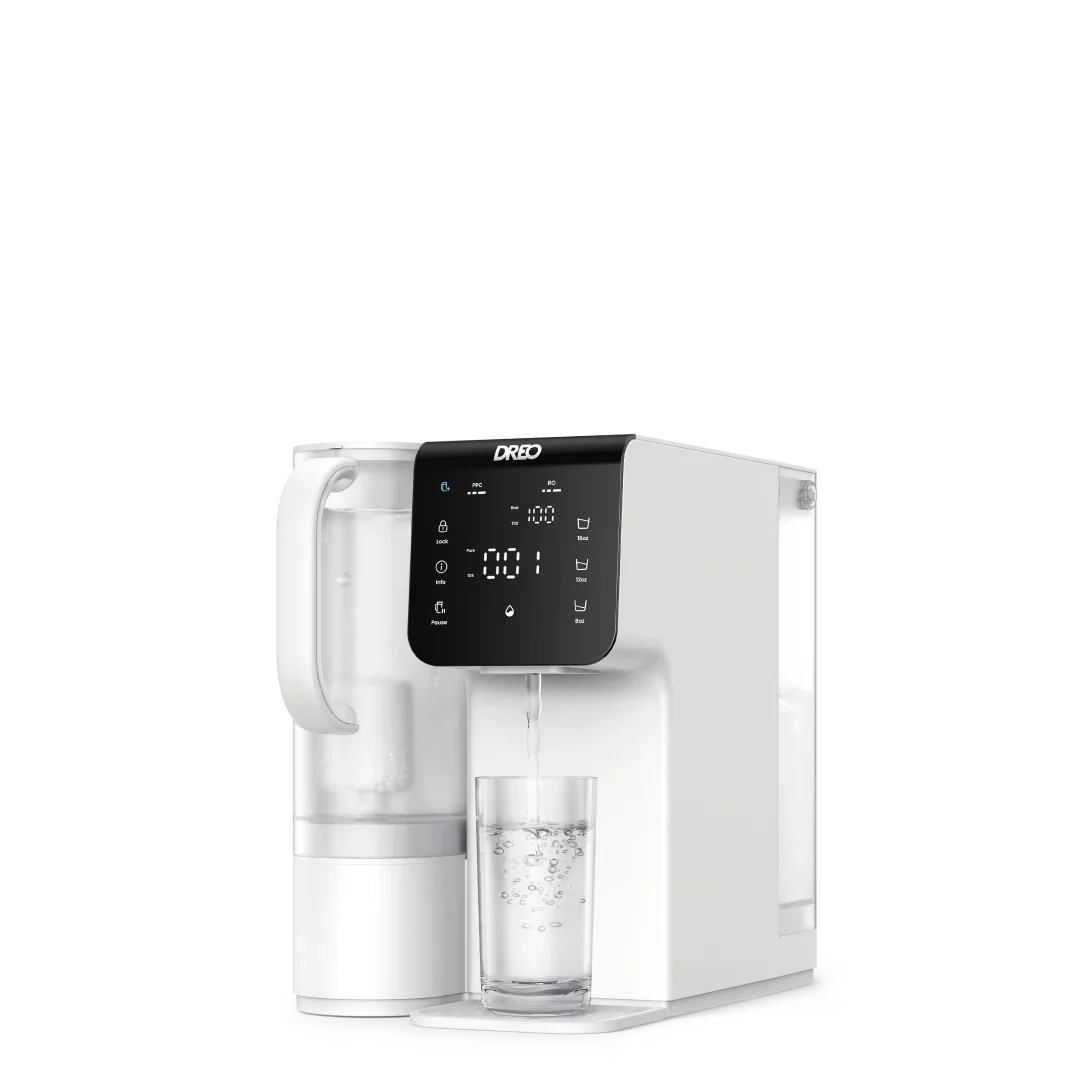
The DREO RO Water Filter 112 is built around a 7-layer filtration system, allowing each stage to focus on a specific category of contaminants. This layered structure is what enables the system to remove up to 99.99% of contaminants, including pollutants such as rust particles, fluoride, chlorine, and other impurities that may be present in tap water.
Just as important, this purification capability is independently verified. The filtration system has been tested by SGS and aligned with NSF/ANSI 58 standards, one of the most recognized benchmarks for reverse osmosis performance. These tests confirm that the system's filtration architecture delivers the level of contaminant reduction expected from a high-quality RO system.
In other words, the 7-layer filtration design provides the purification capability, while SGS testing verifies that capability meets recognized standards.
For something as essential as drinking water, that combination of engineering design and independent verification provides a much stronger foundation than filtration claims alone.

Why Filtration Speed Is Just as Important
Purification capability often receives the most attention when discussing water filters. But in everyday life, another factor can matter just as much: how quickly purified water becomes available.
Many traditional pitcher filters rely on slow gravity filtration. Filling a full pitcher can take quite some time, especially when multiple refills are needed throughout the day. Over time, that waiting becomes noticeable.
Reverse osmosis systems address this challenge by improving filtration efficiency while maintaining purification quality.
DREO's RO filtration system delivers a filtration rate of 260 ml per minute, allowing a pitcher to fill in roughly four minutes. Even as the filter approaches the end of its lifespan, the system maintains a minimum flow of 200 ml per minute, ensuring consistent performance throughout the filter cycle.
That difference may sound small on paper, but it becomes meaningful during everyday routines. Preparing coffee in the morning, filling a bottle before leaving the house, or grabbing a quick glass of water between tasks all become easier when purified water is available faster.
A water filter should not feel like something that slows the kitchen down. Faster filtration helps clean water feel like a natural part of daily life rather than something that requires planning ahead.

Technology That Keeps You Informed
Another area where modern filtration systems have evolved is transparency. It is one thing to install a filter, but it is far more reassuring when the system can clearly show how it is performing.
The DREO RO Water Filter 112 includes real-time TDS monitoring, displaying the Total Dissolved Solids levels for both incoming water and purified water. Watching those numbers change gives a clearer picture of how the filtration process is improving water quality.
Maintenance also becomes simpler when the system tracks filter life and replacement timing. Instead of guessing when a filter should be replaced, the system provides reminders that help maintain consistent purification performance.
There are also a few thoughtful touches that make the experience smoother. An auto-fill sensor automatically refills the pitcher when needed, while a self-cleaning system flushes internal tubes to keep the filtration pathways fresh.
These features may seem subtle, but they help maintain the reliability of the filtration system over time.

Reverse Osmosis Without Complicated Installation
Traditional reverse osmosis systems often required installation beneath the sink, which meant plumbing modifications and professional setup. While effective, those systems were not always practical for apartments, offices, or smaller kitchens.
Countertop RO systems solve this problem by simplifying installation. The DREO RO Water Filter 511 uses a plug-and-use design, allowing reverse osmosis filtration to start with minimal setup. After a quick flush cycle during initial preparation, the system is ready to produce purified water without drilling, plumbing work, or complicated installation.
The system also includes two detachable food-grade pitchers, making it easy to pour purified water directly into a glass, bottle, or kettle. Whether dispensing from the unit or pouring from the pitcher, the process remains simple and flexible.
Sometimes the best technology improvements are the ones that quietly remove friction from everyday tasks.
Efficiency That Reduces Waste
Performance in water filtration also includes efficiency. Earlier RO systems often generated significant wastewater during purification, but modern designs have improved water utilization.
The DREO RO Water Filter 511 operates with a 3:1 pure-to-drain ratio, meaning more incoming water becomes usable purified water rather than wastewater. This helps improve efficiency while maintaining strong filtration performance.

Filter longevity also plays a role in sustainability. With purification capacity equivalent to 8000 plastic bottles, long-lasting filters help reduce reliance on bottled water while lowering replacement frequency.
Cleaner water at home can also mean fewer plastic bottles leaving the store shelf.
Final Takeaway
Great water filtration should be powerful, efficient, and dependable. By combining advanced reverse osmosis engineering with thoughtfully designed performance, DREO brings a smarter approach to clean water at home.
Recommended Articles

Water Filter
DREO Water Filters - The Perfect Solution for Clean Water in Any Space

Space Heater
DREO Convection Heating Technology: How Natural Airflow Keeps You Warm

Space Heater
DREO Space Heater AutoShift™ 360° Technology: Engineering Heat Around the Room

TurboPoly™ Fan
How DREO MotionSync™ Powers Responsive Airflow in the TurboPoly™ Fan 765S