












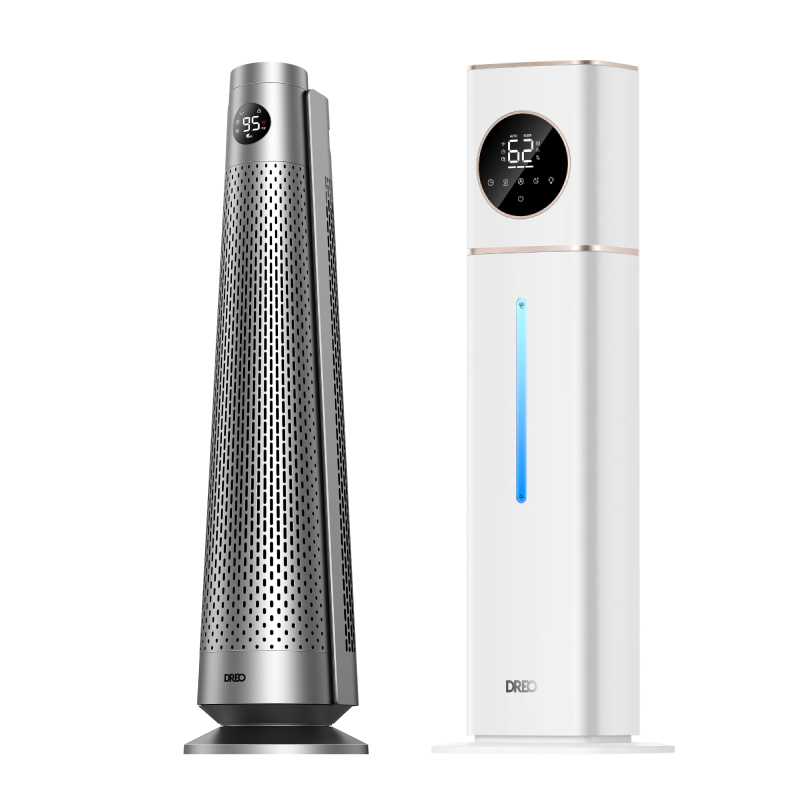
TurboWind: The Engineering Logic Behind DREO’s Smarter Heat Delivery
TurboWind shows how DREO trades brute heat for engineered airflow, making quiet, targeted warmth the real measure of room comfort.


Space heaters have traditionally solved for one thing: heat generation. But the problem is not just creating heat. It is delivering it efficiently, consistently, and quietly. With TurboWind, DREO has shifted the design focus from thermal energy alone to airflow dynamics, producing a heater that does not simply emit heat but transports it intelligently across the space.
TurboWind is not just a feature. It is a complete airflow system that draws on engineering principles to deliver the effortless thermal performance of the DREO Whole-Room Heater 714.

The Problem with Traditional Heater Airflow
Most ceramic heaters work on the same principle: a fan forces air over a heated element. But the way that air moves through the system often undermines performance.
Traditional designs rely on spinning fans that generate rotational airflow, essentially creating a vortex. This leads to backpressure, friction, and turbulence as air hits internal surfaces at unstable angles. The result is reduced airflow reach, lower heating efficiency, and an increase in high-frequency noise. In other words, energy is wasted, and the room fills with hot air that never actually reaches you.
TurboWind: System Level Airflow Recalibration
TurboWind addresses the root problem, which is not just airflow speed but airflow quality.
At its core, TurboWind integrates:
• A precision air guide that realigns spiraling air into a straight, high velocity stream.
• Flow vanes that cut through turbulence and stabilize the stream for reduced pressure loss.
• Multi-ring bracing that eliminates vibrations and acoustic resonance.
• A sealed airflow chamber that contains and channels pressurized air without leaks.
This results in smoother, laminar airflow, something that is uncommon in standard heating.
Quantifiable Gains in Speed and Range
This engineering effort is measurable. In the DREO Whole-Room Heater 714, TurboWind enables a peak airflow velocity of 12.14 ft/s, a significant 54% increase over its predecessor. That velocity translates into greater throw distance and faster room warm-up times within 2 seconds.
Meanwhile, the heating element is reengineered with a 5 mm heating grid, compared with a 3 mm industry norm. Combined with a 143% increase in surface area, this produces faster and more uniform heat exchange at the point of contact.
The overall experience is not only faster warmth but warmth that travels across the room, up the walls, and into corners.

3D Coverage: Airflow That Reaches Every Corner
Air speed alone doesn’t guarantee warmth in all corners. TurboWind is paired with 3D oscillation to distribute heat spatially.
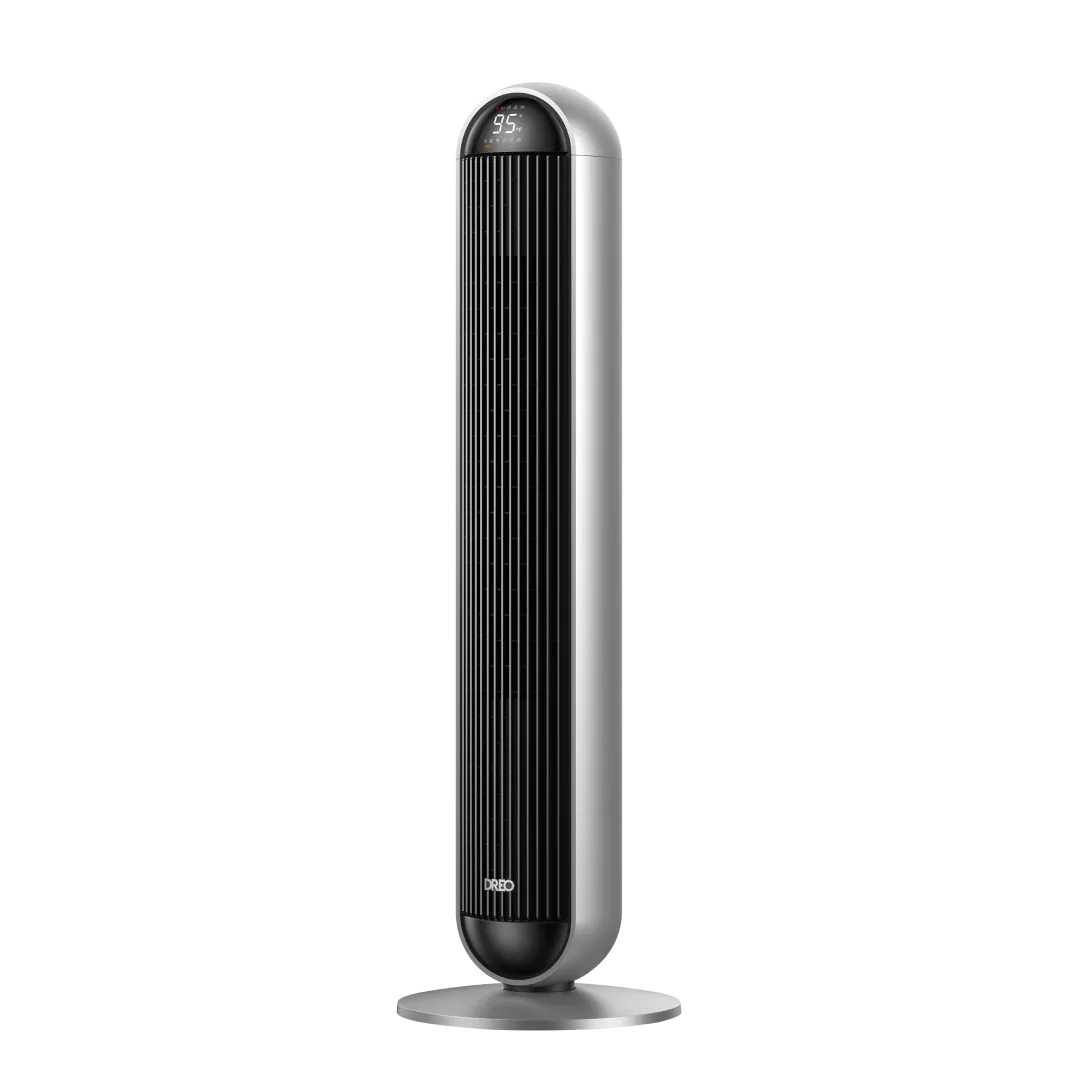
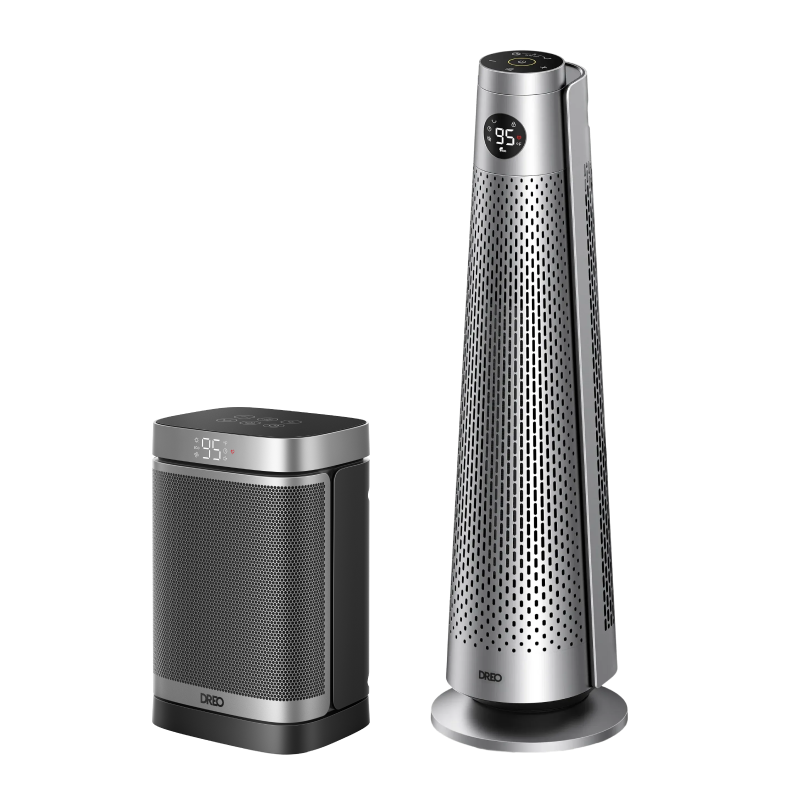
The DREO Whole-Room Heater 715: Features 45° vertical and 70° horizontal oscillation for dynamic coverage in medium spaces.
The DREO Whole-Room Heater 714: Boosts to 90° horizontal and 60° vertical for larger rooms, extending thermal reach.
According to DREO internal testing, this oscillation-driven approach improves total heat distribution by up to 185% compared with static direction heaters.

Thermal Control That Thinks on Its Feet
DREO TurboWind heaters operate with energy-aware control. Both models include ECO Mode, which uses a built-in thermostat to maintain set temperatures from 41 to 95°F in 1° increments. The system automatically reduces airflow and heating power once the target is reached, maintaining comfort while minimizing unnecessary energy use.
This not only adds convenience, but it also optimizes power draw in real-time, ensuring the heater performs exactly as needed, no more and no less.

Engineered Silence
Performance does not need to roar. TurboWind is built with acoustic optimization in mind.
With its aerodynamic blade design and vibration-dampening structure, both the DREO Whole-Room Heaters 714 and 715 operate as quietly as 34 dB, a level below normal conversation and well under most household sounds.
For anyone working from home, sleeping, or simply enjoying a calm evening, this means powerful warmth without the constant reminder that a machine is running.

Final Takeaway
TurboWind technology represents a fundamental rethink of how heat is delivered. It addresses core inefficiencies in airflow, improves thermal reach, and suppresses operational noise, all without reducing output.
If you measure heater performance by how quickly a room feels comfortable and how evenly that comfort spreads, the equation changes. Heat output still matters, but with TurboWind, the way that heat moves becomes the defining difference that sets DREO heaters apart.
Recommended Articles

Space Heater
DREO Convection Heating Technology: How Natural Airflow Keeps You Warm

Space Heater
DREO Space Heater AutoShift™ 360° Technology: Engineering Heat Around the Room

Space Heater
Shaping Heat Intelligently: The Precision of DREO Heaters' ECO Mode

Space Heater
Whisper Through Warmth: The Silent Airway Design Behind DREO Heaters