











DREO Space Heater AutoShift™ 360° Technology: Engineering Heat Around the Room


The hardest part of room heating is not creating heat. It is controlling what happens to that heat once air starts moving through the heater.
Most compact space heaters are built around a fairly fixed airflow path. Air enters the housing, passes through a heating element, and exits from a defined opening. That works well when the goal is simple directional warmth. But rooms are not static environments. Sometimes heat needs to spread across a shared space. At other times, it makes more sense to concentrate warmth towards one occupied area.
DREO's AutoShift™ 360° approaches that problem at the airflow architecture level. As the industry-first motorized 360° airflow system, it draws air inward, drives it upward through the heating path, and can redirect warm air outward in every direction. Instead of relying on a fixed airflow path, DREO integrates the internal air channel and outlet structure to actively guide how warm air is distributed.
From Heat Generation to Airflow Engineering

Inside the system, airflow moves through a front multi-wing centrifugal fan, a volute structure, the heating module, and an upper air guide structure. Those components are designed as one continuous pathway.
Room air first enters the heater from the side. The centrifugal fan creates the pressure difference needed to pull that air inward. Once inside, the volute gathers the airflow and changes its direction before sending it towards the heating section. After the air is heated, the upper guide structure determines how it leaves the unit.
Seen this way, AutoShift™ 360° is not simply another heating mode. It is a way of controlling the geometry of the airflow itself. That distinction matters. Increasing fan speed can change how much air moves, but changing the air path changes where that air goes.
The Centrifugal Fan Starts the Process
The first engineering task is getting enough surrounding air into the heater in a controlled way. The front multi-wing centrifugal fan rotates at high speed and creates localized negative pressure near its center. That pressure difference draws cooler room air through the side intake openings and into the fan.
At this point, the air is moving inward primarily along a horizontal path. For the rest of the heater to work efficiently, however, that flow cannot simply continue in the same direction. The heating structure and upper outlet are positioned along a vertical path, so the airflow needs to be reorganized before it reaches them. This is where the volute becomes important.
A 90° Turn Sets Up the Heating Path
The volute does more than surround the fan. Its shape helps collect the incoming air, build pressure, and redirect the airflow. As air moves through this structure, its momentum is turned by approximately 90°. What begins as a dispersed horizontal intake becomes a more concentrated upward stream.
That transition is one of the most important parts of the design because it establishes a predictable path through the heater. Instead of allowing the air to move through the housing with little directional control, the system deliberately turns it upward before it reaches the thermal section. In practical terms, the fan generates airflow, while the surrounding geometry determines how that airflow is used.
This is a familiar principle in fluid engineering. Moving air is only useful when its direction, pressure, and destination are controlled together.
Heating Happens Inside an Already Organized Air Stream

Once the airflow is traveling upward, it passes through the high-efficiency PTC heating module. At this point, the system is no longer trying to correct a scattered intake pattern. The air has already been collected and redirected, so thermal energy can be transferred into a more stable moving stream. That sequence helps explain why airflow architecture and heating performance should not be viewed separately.
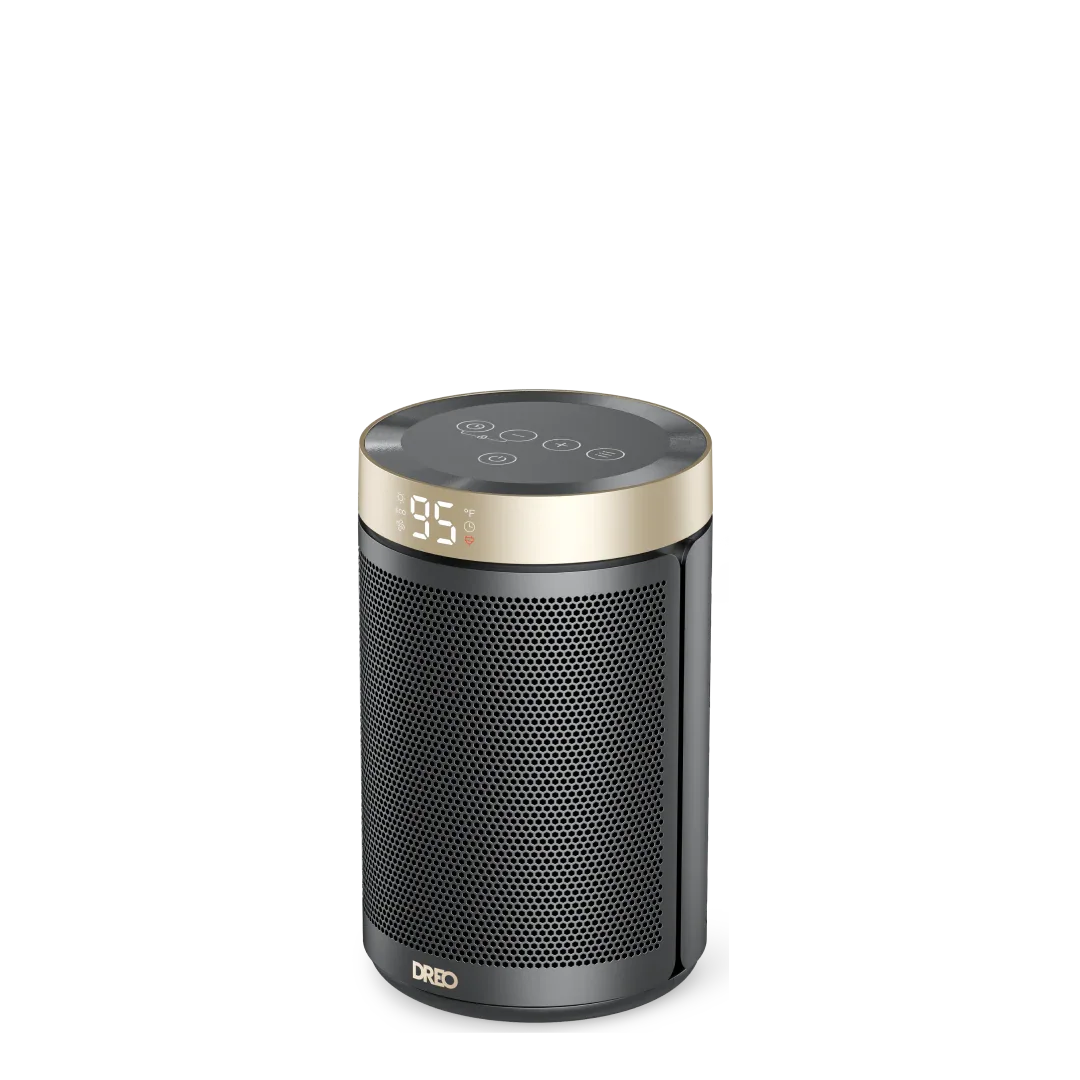
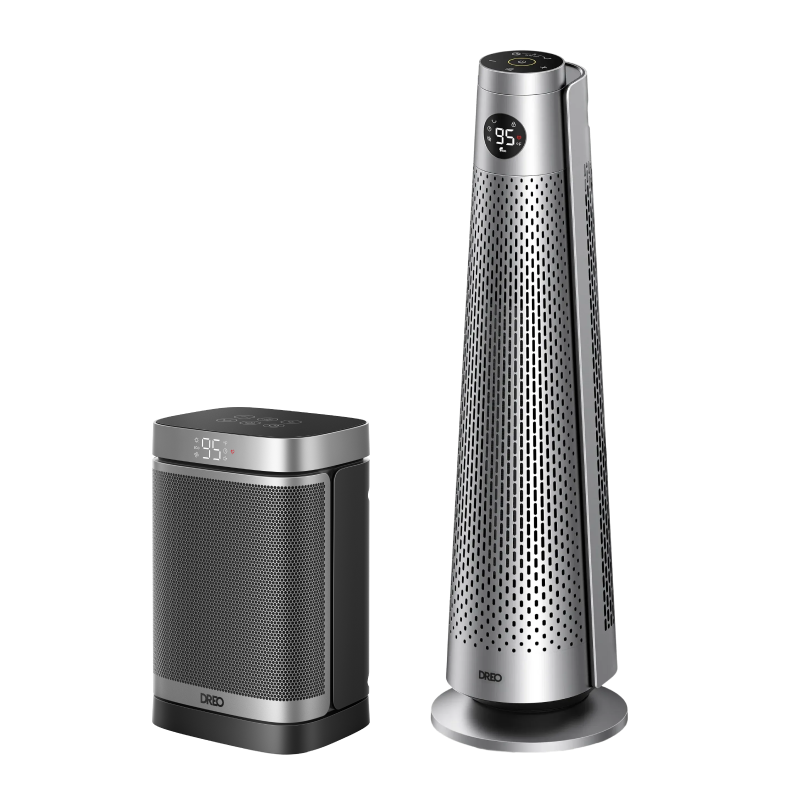
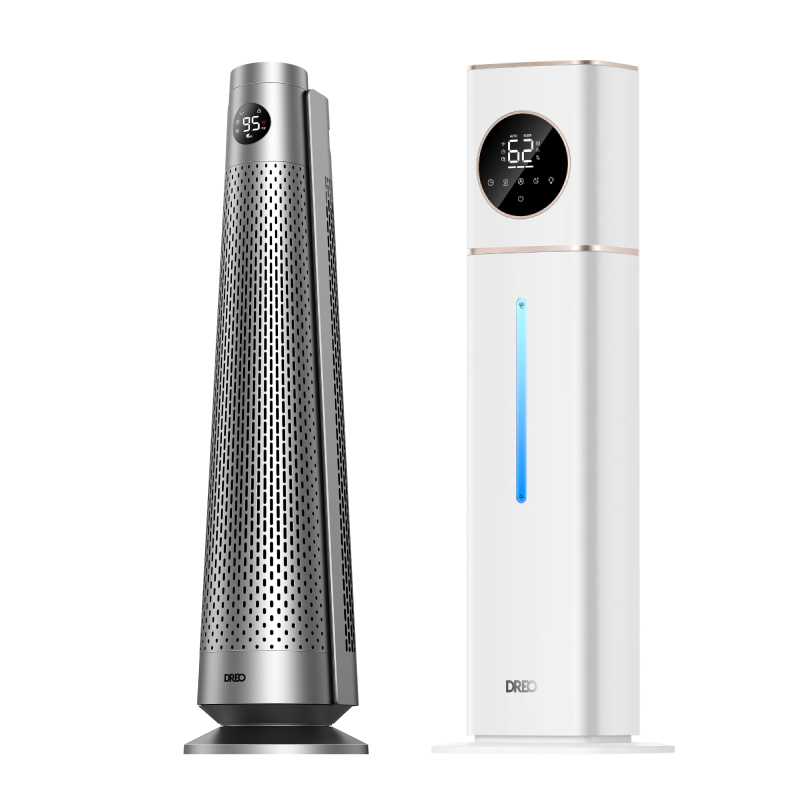
The DREO Whole-Room Heater 725 combines this type of whole-room airflow concept with Hyperamics™ technology for a 2-second1 warm-up and heat delivery up to 9.5 ft/s1. HyperSilent™ operation can reduce noise to 25 dB2, which is particularly relevant when the heater is circulating air continuously in a bedroom or workspace.
The important point is not simply that the heater warms quickly. The heated air already has a defined route through the machine before it reaches the outlet.
The Outlet Is Where 360° Heating Takes Shape
The most distinctive part of the airflow architecture appears at the top of the heater. After passing through the PTC module, the warm air continues upward until it reaches the upper guide structure. In the 360° configuration, that structure redirects the vertical stream outward through an annular outlet.
The result is a horizontal airflow pattern that spreads around the heater. This is fundamentally different from placing a conventional front grille on top of a heating element. The annular structure changes the direction of the warm stream again, using the outlet geometry to distribute it around the surrounding space.
That is the engineering basis of AutoShift™ 360° Whole-Room Heating on the DREO Heater 725. Rather than concentrating warm air towards one front-facing zone, the outlet architecture is designed to release it around the unit.
For a room with people sitting in different positions, that difference can be more meaningful than simply increasing airflow speed.
One Airflow System, Two Heating Patterns
Broad distribution is useful, but maximum coverage is not always the goal. If someone is working at a desk, reading on a sofa, or sitting in one part of the room, a more concentrated path can place more of the airflow where it is currently useful.
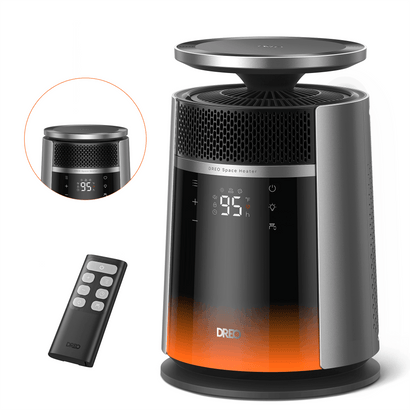
The DREO Whole-Room Heater 720 brings this idea further by allowing the airflow path to shift between 360° whole-room comfort and more focused warmth. With one touch, its motorized mechanism changes how warm air is routed through the upper structure, adapting the airflow pattern to different heating needs. When the lifting structure moves downward or the internal valve switches position, the warm air interacts differently with the upper and side guide surfaces.

Instead of continuing through the full annular outlet, the airflow is redirected towards the front and released through a directional opening. The heating element has not changed. The fundamental intake process has not changed either. What changes is the final routing of the air.
The heater 720 also delivers air at up to 12.8 ft/s3 and uses Hyperamics™ technology for a 2-second4 warm-up. These specifications support the airflow concept without defining it. Speed determines how quickly heated air moves, while the AutoShift™ architecture determines how that moving air is shaped before it enters the room.
Thermal Performance Still Has to Work in Everyday Use

Advanced airflow engineering only matters if the heater is easy to use every day. By combining AutoShift™ 360° with simple temperature control, energy-saving features, and built-in protection, DREO makes the technology feel useful rather than complicated.
Whole-Room Heater 720
On the DREO Whole-Room Heater 720, the temperature can be set from 41°F to 95°F in precise 1°F increments5, giving users finer control than simply choosing between "warm" and "warmer," while ECO Mode6 cuts energy use by up to 40%7. Shield 360° 8-Layer Protection adds an extra layer of reassurance during everyday operation across both the 720 and 725. A 12-hour timer helps avoid unnecessary runtime, while remote operation makes it easier to adjust settings without interrupting work, rest, or sleep.
Final Takeaway
AutoShift™ 360° shows that better heating is not just about making air hot. It is about controlling where that warm air goes and how it moves through the room. By engineering the airflow path itself, DREO moves beyond fixed directional heating to make warm-air delivery more adaptable to different spaces and heating needs.
For a closer look at how different airflow designs translate into everyday comfort, explore DREO's space heater lineup and the technologies behind its approach to whole-room heating.
1Based on DREO laboratory testing at 77°F (25°C) temperature, the PTC heating element can reach 102.2°F (39°C) within 2 seconds. Actual heating performance and results may vary.
2Tested by DREO lab, using DR-HSH035 at the lowest heat settings. Actual results may vary.
3Tested by DREO lab, using DR-HSH040 at the highest heat settings in Focused Mode. Actual results may vary.
4Based on DREO laboratory testing at 77°F (25°C) temperature, the PTC heating element can reach 102.2°F (39°C) within 2 seconds. Actual heating performance and results may vary.
5Test performed by DREO.
6Tested at the lowest airflow heat setting.
7Compared to heating without automatic wattage adjustment, tested in ECO mode, actual performance may vary.
Recommended Articles

Space Heater
TurboWind: The Engineering Logic Behind DREO’s Smarter Heat Delivery

Space Heater
Shaping Heat Intelligently: The Precision of DREO Heaters' ECO Mode

Space Heater
Whisper Through Warmth: The Silent Airway Design Behind DREO Heaters

Space Heater
Hyperamics™ Technology: The Future of Heat, Engineered by DREO