












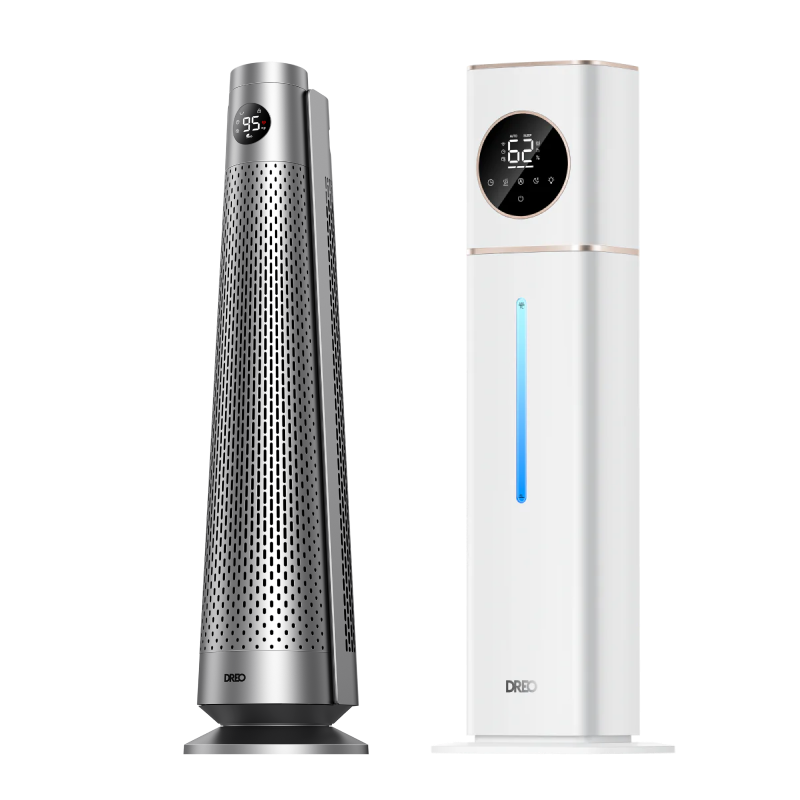
Humidifier vs. Dehumidifier: A Guide to Choosing the Right One


A scratchy throat or a musty smell at home can leave you wondering whether humidity is the problem. Checking the moisture level in your air is a useful first step before buying an appliance.
We'll explain how to measure indoor humidity, recognize signs of dry or damp air, and choose between a humidifier and a dehumidifier. You'll also find answers to common questions about coughing, allergies, and asthma.
Is a Humidifier the Same as a Dehumidifier?

No. A humidifier adds moisture to the air to raise humidity, while a dehumidifier removes moisture to lower it. Humidifiers are suitable for rooms where the air is too dry. Dehumidifiers help manage excess dampness. They aren't interchangeable, and neither cleans the air nor treats respiratory conditions simply by adjusting humidity. Check your room's humidity before choosing one, since symptoms alone won't tell you which you need.
What's the Difference Between a Humidifier and a Dehumidifier?
| Feature | Humidifier | Dehumidifier |
|---|---|---|
| What it does | Adds moisture to raise humidity | Removes moisture to lower humidity |
| When you may need it | Humidity consistently falls below 30% | Humidity regularly exceeds 50% |
| Common signs | Dry nose or throat, chapped lips, frequent static shocks | Musty smells, persistent condensation, damp surfaces |
| Where it's often used | Dry bedrooms and rooms affected by winter heating | Damp basements, closets, and humid living spaces |
| How it works | Adds moisture through mist, steam, or evaporation | Extracts moisture using cooled coils or moisture-absorbing material |
| Water handling | Refill with clean water | Empty collected water or connect a drainage hose |
| What to compare when buying | Moisture output, tank capacity, and humidity controls | Daily moisture removal, tank capacity, and drainage options |
| Cleaning and upkeep | Change water regularly; clean the tank and replace filters or cartridges as directed | Clean the collection tank and filter; keep the drain clear |
| If used too much | Can cause dampness and encourage mold growth | Can make indoor air too dry |
Do You Need a Humidifier or a Dehumidifier?
Start by Checking Your Indoor Humidity
Check your room's humidity with a hygrometer. Take readings at different times over a few days, since cooking, showers, heating, and weather can change the moisture level. Follow the meter's placement instructions and keep it out of direct mist.
The U.S. Environmental Protection Agency (EPA) recommends indoor humidity between 30% and 50%. If readings stay below 30%, consider a humidifier. If they're regularly above 50%, a dehumidifier may help. Dry skin or condensation can be clues, but check the reading before deciding. If humidity is already within range, something else may be causing the discomfort.
Signs You May Need a Humidifier
- Indoor humidity stays below 30%.
- Your nose or throat feels dry or irritated indoors.
- Your lips are chapped or your skin feels unusually dry.
- You notice more static shocks.
- Wooden furniture develops gaps or cracks during dry periods.
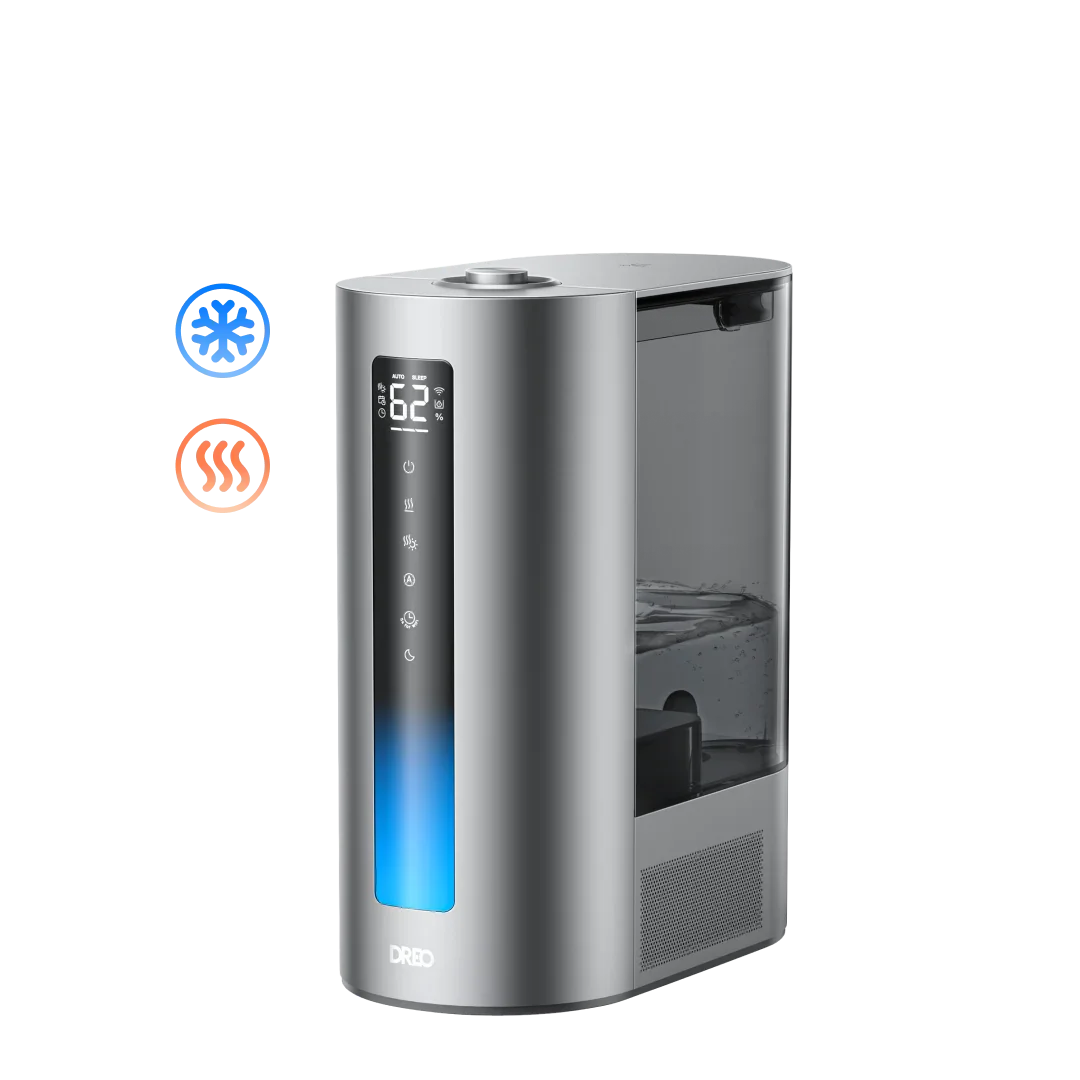
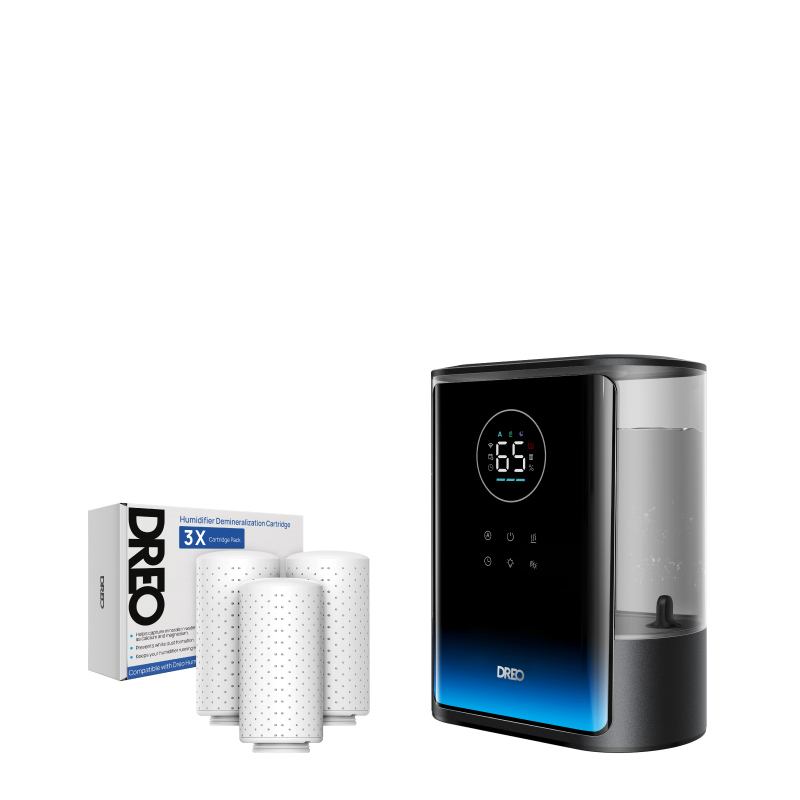
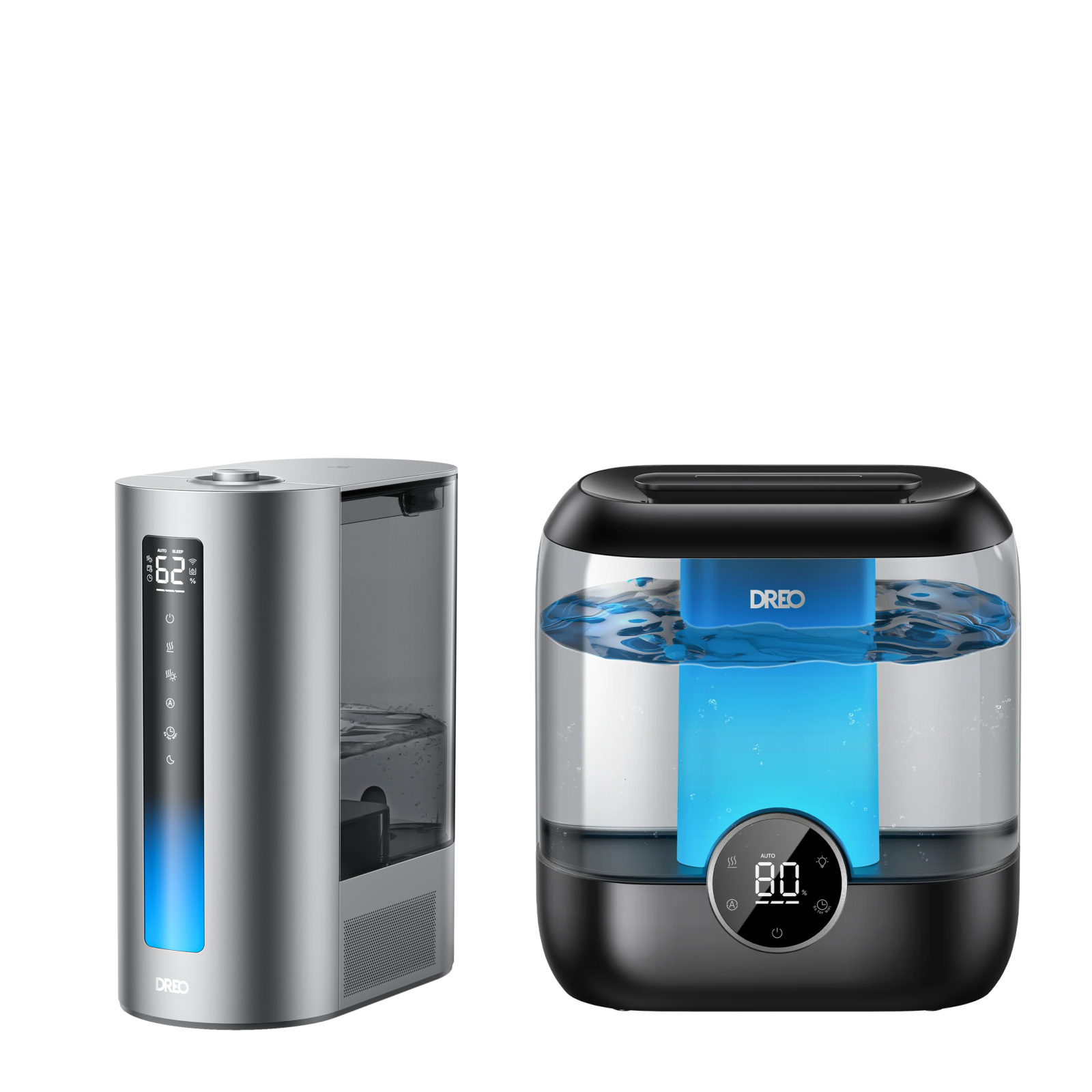
When your bedroom air is dry, the DREO Smart Humidifier 717S gives you warm or cool mist to suit your preference. Warm mist reaches up to 133°F in eight minutes, and output up to 550 mL/h1 helps add moisture quickly. It can raise relative humidity by 18% in 20 minutes.2
You can leave the ongoing adjustments to Auto Mode, which uses a high-precision humidistat for ±5%3 humidity control. The 8L tank cuts down on refills and covers rooms up to 600 sq. ft.4, while operation as quiet as 28 dB5 lets you enjoy your book without much background noise.

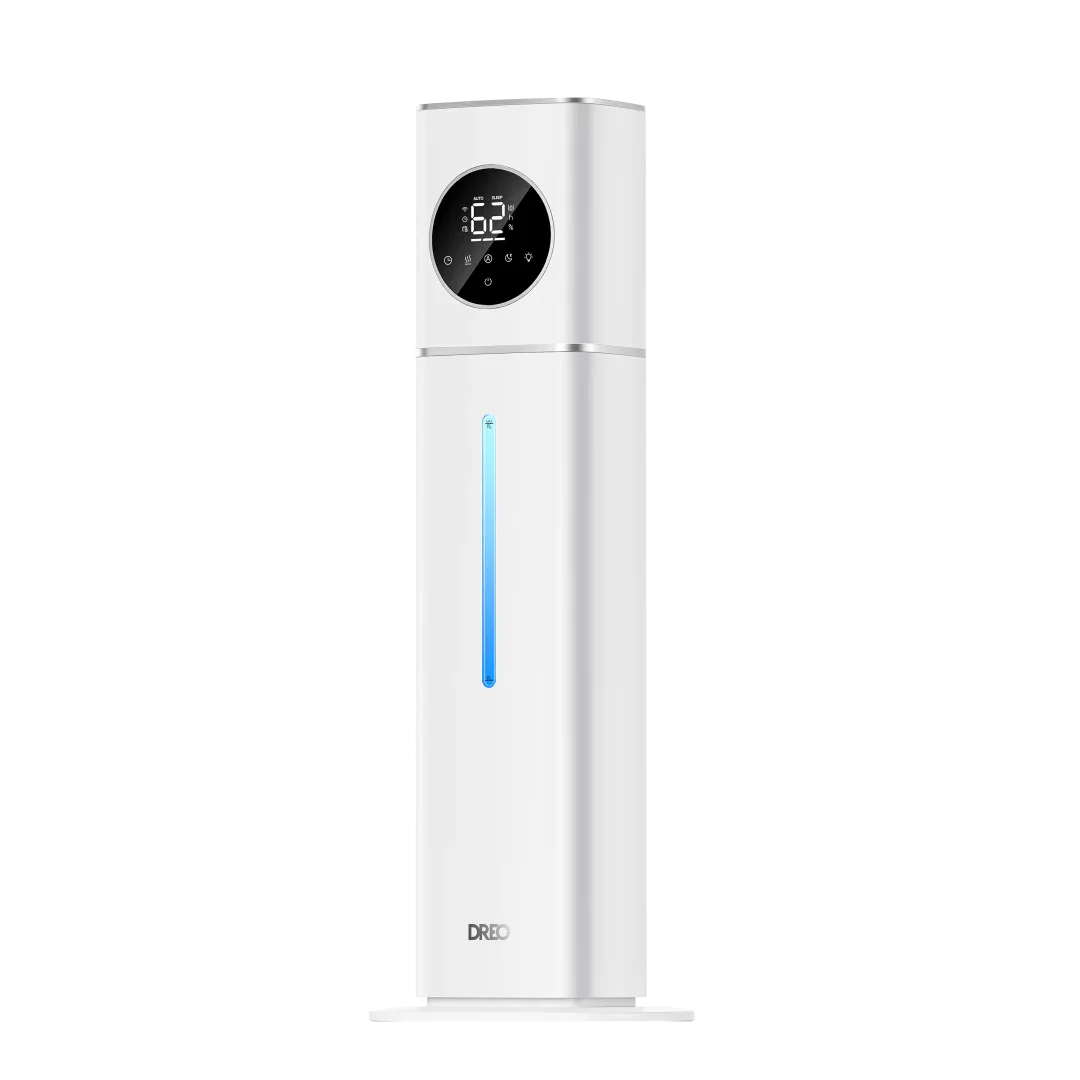
For a larger living space, the DREO Smart Humidifier 747S spreads cool mist across up to 700 sq. ft. Its 11L tank supports up to 100 hours6 of runtime, depending on settings and conditions, so refills interrupt your day less often. Auto Mode stops adding moisture at your chosen humidity level, and app or remote control lets you make adjustments from the sofa. With noise levels as low as 21 dB5, it also fits comfortably into quieter evenings.
Change the water regularly and clean either humidifier as directed, even when water remains in the tank.
Signs You May Need a Dehumidifier
- Indoor humidity regularly measures above 50%.
- Condensation lingers on windows or other cold surfaces.
- Basements, closets, or other rooms smell musty.
- Walls, fabrics, or other surfaces stay damp.
- Mold appears or keeps returning in damp areas.
When your living room feels damp after days of rain, the DREO Dehumidifier 733S helps bring humidity back to a comfortable level. Auto Mode handles adjustments while you go about your day, with noise levels as low as 41 dB while you read or watch TV. Connect the hose to a suitable drain to skip regular tank emptying, and use the app to check settings and energy costs from the sofa.

For a basement where dampness keeps returning, the DREO Dehumidifier 711S removes up to 110 pints7 of moisture a day. Set your preferred humidity, and Auto Mode adjusts the fan speed to stay within a 5% tolerance. Water collects in the 2-gallon tank, or you can connect the hose for continuous drainage without emptying the tank. App, Alexa, and Google Home controls let you make adjustments without heading downstairs.
FAQs About Humidifiers and Dehumidifiers
Do I Need a Humidifier or a Dehumidifier for a Cough?
A clean humidifier may help if dry air is making your throat feel irritated. In a damp room, a dehumidifier may be more useful if mold is contributing to the cough, though the mold itself also needs addressing. Check your humidity before choosing either appliance, and remember that neither treats an infection. Contact your healthcare provider if your cough doesn't go away after a few weeks. Seek emergency care if you have trouble breathing or coughing blood.
Do I Need a Humidifier or a Dehumidifier for Allergies?
A dehumidifier may help if damp conditions in your home encourage mold or dust mites that trigger your allergies. If the air is too dry, a humidifier may relieve dryness, but it won't remove allergens. Measure your humidity first and keep it between 30% and 50%; too much moisture can make allergy symptoms worse. Clean your humidifier as directed, and use distilled or demineralized water in ultrasonic units to reduce minerals released into the air. Humidity control is one part of managing allergies, so keep addressing your specific triggers too.
Is a Humidifier or a Dehumidifier Better for Asthma?
It depends on your indoor humidity and what triggers your asthma. In a damp home, a dehumidifier can help limit conditions that encourage mold and dust mites. The CDC recommends keeping humidity around 30% to 50%. A humidifier may make dry air more comfortable, but too much moisture or mist from a dirty tank can worsen symptoms. Talk with your healthcare professional before using a humidifier, especially for a child with asthma. Keep following your prescribed treatment and asthma action plan.
Final Thoughts: Choose Based on Your Home's Humidity
Check your humidity before deciding what to buy. Dry air may need added moisture, while a damp room needs less. Once you've chosen the right appliance, automatic controls can save you frequent adjustments. Regular cleaning matters whichever you use.
Explore DREO's humidifier and dehumidifier lineup to find the right size and features for your home.
1Tested by DREO lab at the highest mist setting. Actual results may vary.
2Tested by DREO Lab (117 sq.ft.) at the highest mist level in warm mist mode.
3Tested by DREO lab within 2 meters of the humidifier. Actual results may vary depending on room conditions.
4Estimated value only, not based on actual test.
5Tested by DREO lab at the lowest mist setting.
6Tested by DREO lab at the lowest mist setting. Results may vary ±20% depending on room conditions.
750 Pint/day: 65 °F, RH60% 110 Pint/day: 86 °F, RH90%


